Sunday, November 10, 2019

Four Thousand Year Old Wisdom

I've been compiling a list of Sumerian proverbs for a project I'm working on. Sumerian culture thrived in what is now Southern Iraq for 2000 years from about 4000 BCE to 2000 BCE, after which the principle language of the period changed to Akkadian, After this, the Sumerian language lived on as a literary language, much like Latin in the Middle Ages.

Knowledge of the Sumerians and their language was lost for over a thousand years, and only rediscovered again in the 1800s AD.

It's difficult to date these proverbs exactly - they were passed down through generations of scribes and recorded in collections on clay tablets. Some are likely very old and may even pre-date writing, others might be much younger (say, a mere 2500 years old). Many of them have obscure meanings, their idiom being lost to us. Others, though, are quite pithy and still resonate - though maybe not for the same reason they once did! I've put together twenty-five of the most interesting ones here for your pleasure. The more I read about the ancient world, the more I think that people haven't changed all that much across the millennia.

25 SUMERIAN PROVERBS

1. Into an open mouth, a fly enters.
A caution against the dangers of gossip?

2. There is commerce in a city, but a fisherman caught the food
The original 'Farmers Feed Cities' bumpersticker.

3. One does not return borrowed bread.
Literally true, I suppose.

4. A heart never created hatred. Speech created hatred.
We aren't born cruel, after all.

5. Like an ox with diarrhoea, he leaves a long trail behind him.
I love the imagery...

6. A goat says to another goat: "I, too, butt my head".
That's one woke goat.

7. When a burglar makes a hole, he makes it narrow.
They didn't have pianos, yet.

8. A shepherd's sex appeal is his penis, a gardener's sex appeal is his hair.
Not sure what to make of this, but will cultivate both to hedge my bets.

9. Your worthiness is the result of chance.
This one needs a modern equivalent, I feel, as modern worthies seem completely oblivious to the fact.

10. No matter how small they are, they are still blocks of lapis lazuli.
Lapis lazuli was one of the most precious materials.

11. There is no baked cake in the middle of the dough.
It's not over till it's over?

12. He is fearful, like a man unacquainted with beer.
Speaks for itself, really.

13. What is in one's mouth is not in one's hand.
Actions speak louder than words?

14. To be wealthy and demand more is an affront to a god.
This one doesn't seem to have made it to the modern western world.

15. In the reed beds, the lion does not eat his acquaintance.
I should hope not.

16. If the one in the lead is being consumed by fire, those behind him don't say:
"Where is the one in the lead?"
Unless the leader is Mark Zuckerberg.

17. Here I am in a house of brick and bitumen, and still a lump of clay falls on my head.
Planned obsolescence?

18. You should hold a kid goat in your left hand and a bribe in your right.
The goat is to make an offering to a god at the temple, the bribe to get somewhere with the government at the palace. The temple and the palace were the two prongs of government. So this is basically a guide for how to get ahead in life.

19. 'Give me' is for the king. 'Be so Kind' is for the cupbearer's son, 'Do me a favour' is for the administrator.
Diff'rent strokes... different ways to get things done.

20. The lives of the poor do not survive their deaths.
This one needs some explanation. Sumerians believed that after death, people went to the underworld where they had a miserable existence toiling, eating dust, and wearing garments made from old bird feathers. This could be improved by giving them burial gifts and by honouring the dead with offerings of food, water, and prayer. Those who didn't get a proper burial, or who weren't properly honoured after death, could come back as malicious ghosts. So, what what this may be saying is that the poor couldn't honour their dead properly, so they had no existence in the underworld. Or possibly they are referring to the lack of an inheritance for their children.

21. My tongue, like a runaway donkey, will not turn back.
I guess you like the taste of flies, then?

22. I looked into the water. My destiny was drifting past.
Timeless, really. The Queen Street bridge over the Don River here in Toronto bears the words "The River I Step In Is Not The River I Stand In" which is a paraphrasing of Heraclitus “No man ever steps in the same river twice”, all of which compare the flow of life to the flow of a river.

23. A sniffing dog enters all houses.
Kind of like the flu.

24. If the lion heats the soup, who would say "It is no good"?
Hopefully a whistleblower will step forward.

25. My donkey was not destined to run quickly; he was destined to bray!
The older I get, the more I want to embrace this sentiment.

Saturday, May 4, 2019

Book Review: Mesopotamian Chronicles by Jean-Jacques Glassner

Book Review: Mesopotamian Chronicles 
by Jean-Jacques Glassner, 2004, 365pp


This issue from the Society of Biblical Literature is a translation and update of a previous work by the author published in French. It's a survey of the published chronicles (a particular genre of literature that concerns itself with the documentation of events over time) which were originally written in the Sumerian, Akkadian, Babylonian, and Assyrian languages. Their writing spans a period of about 2000 years from the time of the Third Dynasty of Ur (c.2100 BC) to the Seleucid period (c.300 BC). The time periods these chronicles purport to cover are the same, but in some cases they stretch back to the dawn of humanity, before the mythical flood.

About two-thirds of the book is devoted to the translations and transliterations of some 53 unique texts, most of which are fragmentary - many extremely so. The remaining third is devoted to a discussion of the nature of the texts (how they're classified, what characteristics they share, who wrote them, and why), and to a discussion of Babylonian and Assyrian thought on the nature of origins.

Most interesting in this first third of the book, though, is the author's thesis on the Babylonian view of the nature of history, and why they considered it valuable. According to Glassner, Babylonians didn't see history as linear, but cyclical. Their chronicles, and especially the earliest, the Chronicle of the Single Monarch, which attempts to relate for the first time the earliest history of the people going back thousands of years, is predicated on the idea of cycles.

The greatest cycle was that of the 'flood', for which original Sumerian word apparently refers to a 'meteorological event that is a weapon of the gods' and could relate to both a great storm or an invasion. 'Deluge' might be a better translation. In any case, it refers to a wiping clean of the land by something of divine origin that flows over the land. The mythical 'Flood' is one example. The invasion of the Gutians at the end of the Akkadian era is another.

Within the flood cycles are dynastic cycles, in which the high kingship of the ruling city is passed to another king of the same city. When the dynastic cycle ends, rulership is passed to a new dynasty in the next city. Within each dynasty is another another nested cycle - that of individual of kings. Kings rule for cycles of years, which are made of a cycle of months, which are made of days, which are made of hours.

Babylonian linear history therefore looks something like this:
Hours are nested within
Days, are nested within
Months, are nested within
Years, are nested within
The Reigns of Kings, are nested within
The Dynasties of Cities, which are nested within
Divine Deluges.

The purpose of knowing the cyclical history (which is more important than the linear history) is so that any given king can figure out if he's going to be the one at the end of a cycle or not. Because nobody wants to be that guy.

As usual when I review these books on ancient history, I like to provide a few excerpts to show what I find so fascinating, and to illustrate how I might apply them to games and world-building. Here are some things that particularly caught my eye:

REPLICATING THE CITY
From the discussion of page 87:

"The Replica of Babylon: Two chronicles explained the tragic end of Sargon of Akkade by reference to a sacrilege he had committed by removing soil from Babylon and reconstructing a replica of the city elsewhere. Should we see here an allusion to the Assyrian practice of transporting soil from conquered territories to be trampled daily under the feet of its conquerors? Rather, the comparison with Nabonidus seems more likely, as he was reproached for wanting to construct at Tayma, in the north of the Arabian peninsula, a replica of the palace of Babylon."

Both of these suggestions are compelling to me. The former is basically the epitome of the act of what we would consider an evil empire - adding injury to defeat. The latter is interesting in a society where cities belong to their gods - for a human king to want to build a replica of a divine city would be seen as the height of hubris. Maybe, in your homemade world, it's the latter act that causes the 'deluge' which takes the form of the invasion of someone who would trample your soil daily - that's an interesting cycle in and of itself.

THE SUBSTITUTE KING
Here's an actual chronicle entry. This was written in the late Babylonian period (7th century) but refers to a much earlier event in the 20th century BC. This instance, which takes place during cycle of the first dynasty of Isin, describes the practice of the substitute king, in which a king receives a warning by omen or prophecy that he will die, and so places a courtier or some other poor sap on the throne for a short time, while he takes the position of 'gardener'. Usually, if nothing happens naturally to the substitute king, he is killed and the prophecy is fulfilled. Then the rightful king retakes his place. In this instance though, events unfolded otherwise:
"King Erra-imitti ordered Enlil-bani, the gardener, to sit on the throne as royal substitute and put the crown of kingship on his head. Erra-imitti died in his palace while swallowing soup in little sips. Enlil-bani sat on his throne, did not resign, and was elevated to the royal office."

In this case, the rightful king died while he was playing the gardener. The substitute refused to step aside, and kept the throne. I have no idea what the significance of the 'little sips' is, but I love the detail. This would make a superb set up for a one-shot game. Imagine if the player-characters were sent on a diplomatic mission, only to find that the king they were supposed to treat with had been replace by a temporary substitute. Would they treat with the substitute, or try to find the real king, who is hiding as a 'gardener'. Then, when they do find the real king, he dies, choking on soup - maybe right in front of them. Imagine the look on the player's faces.

ACTS OF A DERANGED KING
In another late chronicle, we are treated to the events that chronicle the mental or moral breakdown of a king of the Chaldean dynasty of Babylon, Nabu-shuma-ishkun. He commits all kinds of acts that would be considered atrocities today - maybe they were then, too, but people felt powerless to stop them.

"Unshaven, he mutilated (the fingers of) his apprentice scribe, and, wearing fine gold, he entered into Bel's (Marduk's) cella of offering..."
"A leek, a thing forbidden (taboo) in the Ezida (temple), he brought to the temple of Nabu and gave to the one "entering the temple" (a temple functionary)."
"In (only) one day, he burned alive sixteen Cutheans (citizens of the city of Cutha) at Zababa's gate in the heart of Babylon."
"The man Itagal-il of the town of Dur-sha-Karhi , which is on the banks of the Euphrates, came into his presence and swore agreements and oaths, but he committed insult and unspeakable slander that are forbidden of princes against him and counted his town as booty."
"In the sixth year, he turned his attention toward the Esagila , the palace of Enlil of the gods, with a view to restoring it, but the possessions of the Esagila (as much as was there, that earlier kings had donated) he took out, gathered them into his own palace, and made them his own: silver, gold, choice and priceless stones, and everything that befits a deity, as much as was there. According to his good pleasure, he made offerings of them to the gods of the Sealand, or the Chaldeans, and of the Aramaeans. He would adorn the women of his palace with them and would give them to the kings of Hatti and Elam as signs of respect."

Stealing from the gods, cursing, and bringing leeks into the temple! Now there's a king just asking for a deluge!

SUMMARY
Like so many books that survey ancient literature, this book holds some serious gems. You have to sort the wheat from the chaff, but here the author helps us do that and gives us some synthesis. He could have just presented the chronicles as they were and left us to draw our own conclusions, but he didn't. His analysis really brings the chronicles alive and reveals the wonder of the ancient world.

Saturday, February 9, 2019

Bet you didn't know... About Those Crazy Elamites!

Elam (Haltamti, in their own language) was a kingdom of ancient Iran, active before the Medes and Persians arose. Their kingdom lasted about 2000 years, from 2400-539BC. During that time they butted heads with the Sumerians, Babylonians, and Indus Valley people, among others. 

Elam was a kingdom in two parts. The highland portion to the southeast, Elam proper, was ruled from the city of Anshan. The lowland portion (called Susiana) to the northwest was ruled from the already ancient city of Shushan, also known as Susa.

During their middle phase, Elamites had an unusual succession system by which there were three rulers:
The Sukkalmah (High Regent), was the highest office of the three - effectively the king.
The Sukkal of Elam (Regent of Elam) who was based in Anshan, and the Sukkal of Susa (Regent of Susa) were his co-rulers. 

The Sukkal of Elam was away the brother of the Sukkalmah.
The Sukkal of Susa was the eldest son or nephew of the Sukkalmah.

When the Sukkalmah died, the brother in the position of Sukkal of Elam would become the new Sukkalmah, and the next brother in line (who may not yet have held a position) would become the new Sukkal of Elam. The Sukkal of Susa did not change. Only when all the Sukkalmah's brothers died would the son (or nephew) in the position of Sukkal of Susa become the new Sukkalmah, and his brother would become the new Sukkal of Elam, his son (or nephew) the new Sukkal of Susa.

So, in effect, whole families became joint rulers of this land. Family ties were obviously very important.

In later years this system would morph into something different, but the importance of family ties remained, and family drama would grow to George R.R. Martin-esque proportions.

From the Encyclopedia Iranica:

The inscriptions of [king] Å utruk-Nahhunte and his successors have revealed the practice of incest within the royal Elamite family.

The principal member of this family was Queen Nahhunte-utu. This altogether exceptional woman in Elamite history, and even in the ancient history of the Near East, bore ten children from four different fathers, who followed one another on the throne of Elam. From her father, she had at least two children, a son Hutelutuš-Inšušnak and a daughter, Inšnikarab-huhun. When he died, she married his elder brother, Kutir-Nahhunte, from whom she had two or three children. Shortly afterwards, the king was killed, and she then married his second brother Šilhak-Inšušinak, from whom she had 4 or 5 children. Finally, she gave birth to Melir-Nahhunte, a princess she had had from her own son, Hutelutš-Insušnak, whom she had had from her own father.
(F. Vallat, “Nouvelle analyse des inscriptions néo-élamites,” in Collectania Orientalia, Neuchâtel and Paris, 1996, pp. 385-95.)
This dynasty lasted a surprising 200 or so years.

Links:
Shutruk-Nakhunte
Shilhak-Inshushinak
Wikipedia: List of Rulers of Elam

Sunday, January 27, 2019

Book Reviews - Two Books by Brian Bates About Anglo-Saxon England

And a game in which to play them!

This post collects two short book reviews about Anglo-Saxon mystical thought by University of Sussex professor of psychology and shamanic studies, Brian Bates, a respected authority in the field. 
More about Brian Bates from Wikipedia 

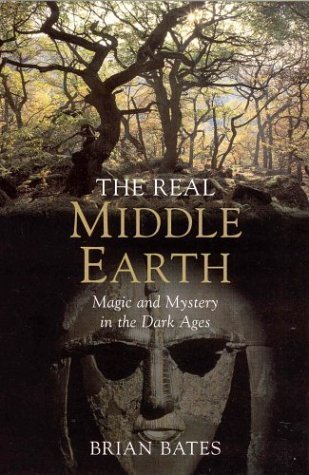
The Real Middle Earth: Magic and Mystery in the Dark Ages 
by Brian Bates, 2003, 292 pages

This is a survey-level book about the mystical aspect of Anglo-Saxon culture and it is just loaded with interesting little bits of mythical Saxon lore. Here's a look at some of what it covers:

  • Saxon cosmology
  • The people of the dark ages (the author sees the Celts, Germanic tribes, and Norse as part of a pan-European culture)
  • How they lived
  • Their perception of forests
  • Their reaction to what the Romans left behind
  • Dragon and their lairs
  • Treasure hoards
  • Elf shot
  • Herbalism
  • Spirits
  • Wells and waterways
  • Corvids
  • Omens
  • Shape changers
  • Voyaging to the spirit world
  • Wyrd, and those who weave it and can read it.
  • Giants
  • Dwarven craftsmanship
  • Magical bonds
  • Shamanic initiation (and spiders)
  • The journey of the dead.
That's a lot of ground, as you can see, but it's given to us in lively and pleasant prose and is quite accessible. It also appears to be well researched - there's an extensive bibliography at the end. The book takes the approach of trying to define Anglo-Saxon culture from all sides, looking at the writings of Romans (especially Tacitus), Christian monks, and later Scandinavian and Icelandic texts, and of course Anglo-Saxon texts, too. From this, we get a rather broad but impressionistic feel for the zeitgeist of the time. It takes some liberties with history, as many more knowledgeable reviewers than I have pointed out on Amazon and elsewhere - but if what your interested in is the stuff not captured by history - a peek into the mind of a Saxon shaman , there's a lot to chew on. 

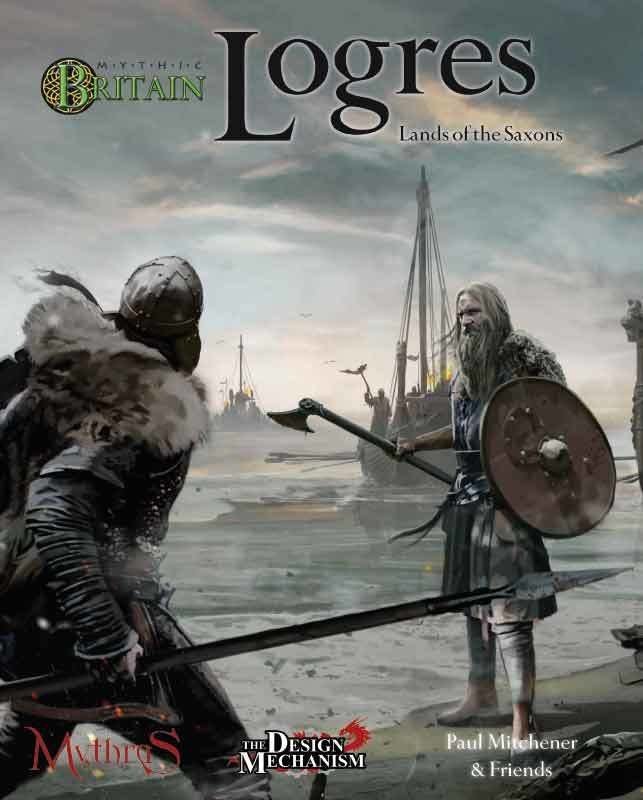
If your a gamer looking to play, for example, Mythic Britain: Logres - you'll probably find this book to be a wonderful companion. If you're familiar with the Mythras game system, you'll find yourself nodding your head a lot as the author describes the ways of the Shaman, and you'll find some new things to think about too. I can also see it being useful to Ars Magica players interested in older magic traditions, perhaps for giving your Ex Miscellanea mage or a local hedge wizard a bit of flavour. 

If you're coming to this book because of a love of Tolkien, however, I should provide a few words of caution. The title is clearly a gimmick to tap in on the popularity of the movies, which were being released when this book was published. The author does mention Tolkien and how he was inspired by Saxon lore, but maybe only once every 2 chapters - just enough to make sense of the title. Tolkien is obviously not the thrust of the book, though Tolkien fans would still find it interesting, I think, as long as their expectations are properly set.

I recommend it as a starting point for anyone interested in reading up on the spiritual thinking of past people. Lastly, it strays from time to time into self-indulgence, enough to make me wince, but not enough to mar the overall book. As a companion to running a mythic role-playing game, it's just about perfect.


The Way of Wyrd: Tales of an Anglo-Saxon Sorcerer 
by Brian Bates, 1983, 237 pages

This book was recommended to me by my friend Paul as a follow-up on The Real Middle Earth.

The Way of the Wyrd is a fiction that follows the fortunes of Wat Brand, a scribe in a Christian mission in Saxon-era Mercia, as he is sent into deepest, darkest Sussex to learn the ways of the pagan Saxons who live there. He's told that a guide will meet him, and that guide is Wulf, a Saxon sorcerer, who takes him under his wing and teaches him to open himself to the spirit world.

It's easy to see how this book influenced the later Real Middle Earth, which is much more like a concrete survey of Anglo-Saxon mystical thinking. In this book we encounter many of the same ideas, but here presented in a much more dreamlike story format. It is very much as if the teaching in this earlier book is intended to be from heart to heart, while that in the latter book is from mind to mind. Personally, I respond much more strongly to the latter, and TWoW had me often asking myself "why is this happening, exactly?", but Bates is an eloquent writer and the prose zips along so, despite confounding the rationalist in me, it was a pleasant read.

Recommended for anyone into spiritual customs. Prepare to be baffled if you run mostly on logic, though.

As an aside, this book has inspired several pieces of music, including the thrash metal album Dreamweaver by Sabbat and many much more mellow pieces. There's definitely something to be said for a book that can inspire so much creativity.

Mythic Britain: Logres
Since I mentioned this above as a sourcebook for playing a Saxons campaign, I thought I'd say a few more words about this product.

Mythic Britain: Logres is a supplement by Paul Mitchener for the Mythic Britain setting (itself written by Lawrence Whitaker) for the Mythras game system. It takes the setting of Mythic Britain, rolls it over, and gives it back to us from the viewpoint of the Saxons. Logres, by the way, is the Brythonic name for the "lost lands" that the Saxons now control.

The book contains chapters on Saxon culture, spirits and magic, character creation, Saxon lands and settlements, and key personages acting in the Saxon lands. There're are also 4 scenarios that link together into a short campaign for 4-8 sessions of play (or, if your group is like mine, 12 sessions of play).


Wednesday, January 16, 2019

The Hbyt - A Campaign about Friendship and Greed


Today on his blog, Paul Mitchener was musing on how he might revisit his Hunters of Alexandria game. This gave me an idea.

I think there's a lot of scope for expanding with a sort of 'city breaks' book that gives adventurers a wide variety of places to visit on travels from Alexandria. There are a lot of very interesting but less famous Egyptian locales that would really lend that feeling of wonder and mystery to an adventure. And in this case I'd certainly include the Fayyum city of Arsinoe in Arcadia - aka Crocodilopolis. From Wikipedia: "The city worshiped a tamed sacred crocodile called in Koine Petsuchos, "the Son of Soukhos", that was adorned with gold and gem pendants. The Petsoukhos lived in a special temple pond and was fed by the priests with food provided by visitors. When Petsuchos died, it was replaced by another."


That's very cool on its own, but let's take this a step further and turn it into an RPG campaign.


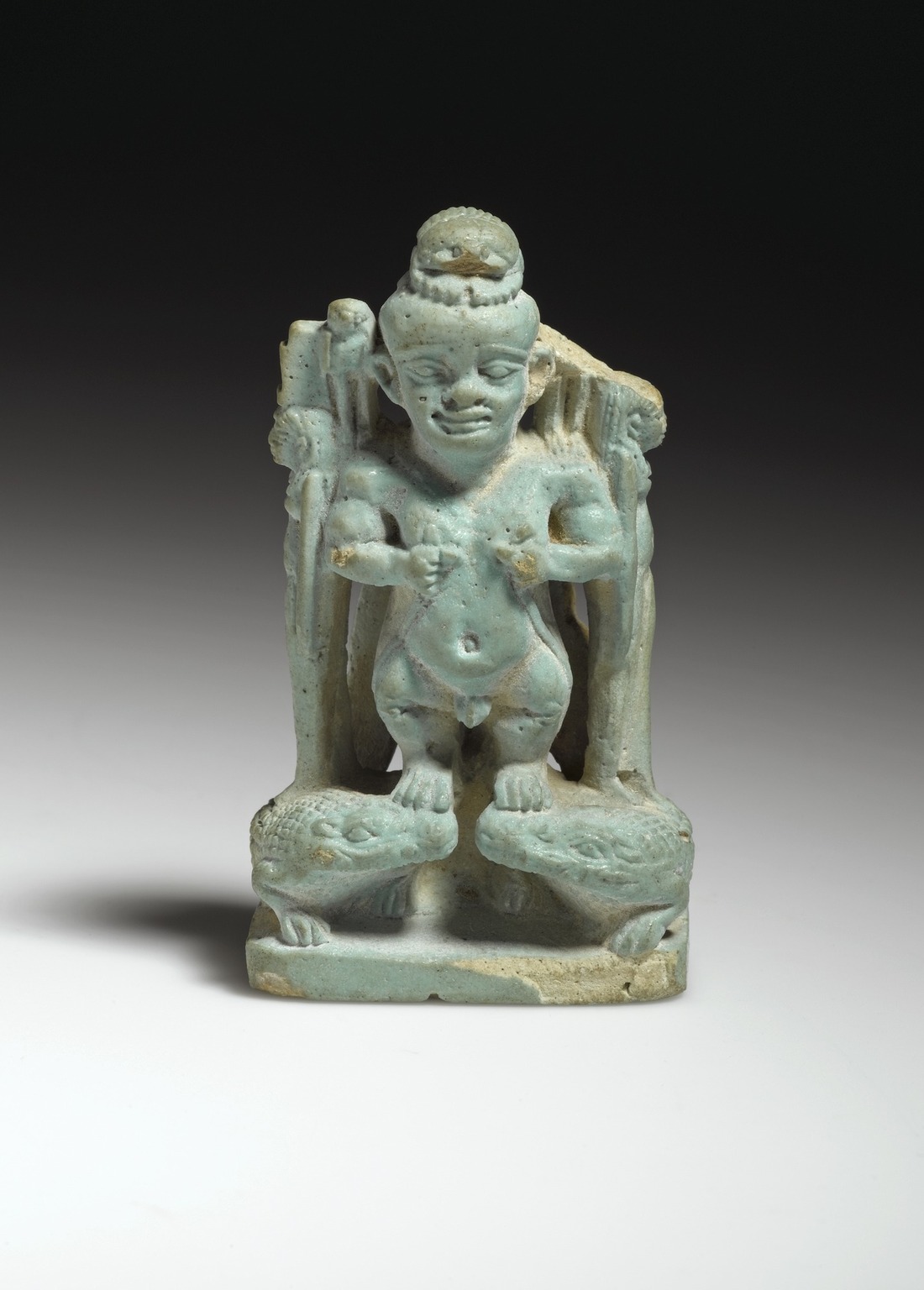
Pataikos, or nmw


The Hbyt

A bunch of Egyptian nmw, or Pataikos, servants of the cult of Ptah, wish to reclaim the treasures of their ancestors, unjustly robbed from them by the cult of Petsoukhos generations ago. On the advice of a priest of Thoth, they arrive for an unexpected party at the house of an unlikely burglar in Alexandria, whose door the Priest of Thoth had marked with a hieroglyph. The burglar is surprised by the intrusion, but politely provides many festive offerings to his guests. Before he knows it, the burglar agrees to set off on adventures with them and leaves Alexandria for the first time.

On their journeys they are nearly eaten by sphinxes, then captured by Troglodytes from the Erythrean Sea or Upper Nile area, and while trapped in the troglodyte caves the burglar meets an ancient mummy and wins a treasure from him - the Ring of Gyges, which turns the wearer invisible.

Eventually they all get out of the caves, only to be hunted by jackals, and then rescued by griffins and deposited on an island in the river where they meet a man who can change into a hippopotamus. They next traverse the great reed beds and nearly run afoul of giant water striders.

Finally they make it to Crocodilopolis and discover the secret way into the lair of Petshoukhos by moonlight. He lies within, encrusted in gems. Using the Ring of Gyges, the burglar steals the Eye of Osiris, which angers the great reptile, who then goes on a rampage in the city of Arsinoe where he is eventually killed by a local archer - but not before the town is nearly destroyed. 


While the local residents deal with the great croc, the patraikos move into the lair and reclaim it and its treasure for themselves, as their heritage. The burglar finds he must mediate between the two groups that want the treasure in payment for past wrongs. And to complicate matters, the angry troglodytes, jackals, and some bird pals show up seeking revenge.

Now, what could you call this campaign? Maybe name it after the unexpected party that starts it all. Looking up the Egyptian word for festive offerings in the dictionary, that gives us Hbyt, so we'll call it The Hbyt. Sounds about right.

Links:

Crocodilopolis
Pataikos
Troglodytes
The Ring of Gyges
Ancient Egyptian Dictionary


Saturday, January 12, 2019

History Book Reviews - Three City Books: Ur, Ugarit, and Erbil

This post collects three of the book reviews rescued from my G+ feed. Each of these books discusses the archaeology and known history of a single ancient city: Ur, in the land of Sumer, Ugarit, in the land of Canaan, and Erbil, in the land of Assyria.


1. Ur - The City of the Moon God
by Harriet Crawford, 2015, 146 pages


This book offers a capsule history of the ancient city of Ur, one of the oldest known cities in the world. Located on the lower Euphrates river near the head of the Persian Gulf, this city played an important role in the early history of the ancient near east and, for about 100 years at the end of the 3rd millennium BC, was arguably the most important city in the world.

The author, Harriet Crawford, is one of the most prolific writers on this period and definitely knows her stuff. As a survey, this book covers all the periods that saw people living and working on the site, from the Ubaid period c.5000 BC to its eventual decline sometime during the or after time the Persians ruled Babylon c.500BC. She also discusses the archaeological work of Sir Leonard Woolley in excavating the city in the '20s.

As a light survey, I think it does a fine job. It's accessible to the lay-person and relatively concise. For my money, though, I think I would have preferred something more complete - an encyclopedia of the city of Ur. As such this book is nowhere near complete. It lacks illustrations of many of the key finds discussed in the text, and is missing king lists and other historical data. It's also a little shy on synthesis, which is something I have found in other books by this author - she prefers to lay out facts and let the reader draw their own conclusions. This book mainly focuses on the architecture based on archaeological evidence. It adds little that is new to the discussion of Ur, so if you've already read something about this city or period in some depth, you won't find anything too exciting in here.

If you're interested in cities of the ancient near east (including Ur), then I would point you instead to Mesopotamia: The Invention of the City by Gwendolyn Leick, which tells the story of ancient Mesopotamia, from the first cities to the invasion of the Persians, one city at a time from Eridu to Babylon. It's one of the most remarkable books on ancient history I've ever read, and Ur gets its own chapter. 


2. Ugarit: Ras Shamra 
by Adrian Curtis, 1985, 125pp


Ancient cities fascinate me because they're puzzles. They can be excavated for years, but never fully discovered, so scholars and archaeologists take what they can find and try to create the most complete picture possible. Even the most complete picture still leaves a lot to the imagination, and there are always new places to dig, either sideways or down.

Ugarit is one of those cities. Chances are you haven't heard of it, but it's an interesting place. It lies on a headland on the Mediterranean shore of modern Syria, south of the Turkish border. It was settled and abandoned more than once between 6000 and 2000 BC, and finally reached its peak development in the middle and late bronze age between about 1800 and 1200 BC. It was destroyed and abandoned for good during the cataclysmic Bronze Age Collapse that took place around 1200-1100 BC - the same event that saw the fall of a great many cities in the area, including the Hittite empire of ancient Turkey and the Mycenaean civilization in what is now Greece.

During its heyday, Ugarit was an important nexus for trade, being at the northern edge of Egyptian influence, the eastern edge of Mycenaean influence, the southern edge of Hittite influence, and the western edge of Mittanian and Assyrian (and before them Akkadian) influence. Being always on the edge of great empires, it was both free to develop its own culture and yet close enough to be exposed to what was happening in larger and more influential centres. It was occupied by a mix of Semitic and Hurrian speaking people.

The most important discoveries from Ugarit are the written tablets containing what has become known as the Ugaritic Script - perhaps the earliest alphabetic script - which was used to write the Ugaritic language - a semitic language related to Hebrew. These ancient writing tablets contain records of financial transactions, correspondence, and most important, the most complete records of Canaanite myth so far discovered.

Ugarit by Adrian Curtis describes the early history of the city, life in its golden age (including a brief summary of some of the sordid affairs of its kings), a description of the city based on archaeology, a summary of the myths discovered, and two more in-depth essays on what the religion of the city might have looked like and why all of this is relevant to bible scholars.

I particularly enjoyed reading about King Ammistamru's troubles involving his brothers and what appear to be two divorces, all of which seemed to need the interference of the Hittite king to be settled. I also enjoyed reading the myths of the city god, Baal, and the discussion of how he relates to the Hebrew god, Yahweh.

This volume by Curtis is one of a few book length treatments of the city I'm aware of. Another, by Marguerite Yon, translated into English from the original french, is a little newer and probably probably more up-to-date, since a major find of 300 tablets was discovered in the years between when these two books were published. I haven't read that book, but would be inclined to suggest it instead of this one simply because it is more current. But if you happen to see the Curtis book on a used book shop shelf somewhere, by all means pick it up and give it a read.

And if you already know something about Ugarit and would like to learn more, then be sure to check out the historical novel by my friend, Richard Abbott: The Flame Before Us which is set in Ugarit during its final fall c.1200 BC. 


3. A City from the Dawn of History: 
Erbil in the Cuneiform Sources 
by John MacGinnis, 2014, 128 pages


My ideal book on an ancient city would include both original written texts and archaeological data, both of which are thin on the ground. Rather good books have been written about the cities of Ebla and Mari. I recently reviewed one on Ur and another on Ugarit. This book focuses on Erbil (anciently known as Irbilum, Urbilum, Urbel, and Arbail) which is located in Iraqi Kurdistan on the Lesser Zab river. It's not my ideal book, but it has enough to keep me interested.

Unlike Ebla, Mari, Ugarit, and Ur, the city of Erbil is still an inhabited city of about 1.5 million people. There is evidence for settlement here as far back as the Ubaid period (C.5000 BC), so Erbil is a contender for the title of the world's oldest continuously inhabited city. Being inhabited, Erbil hasn't been able to benefit from an extensive archaeological program, but with the help of UNESCO it is about to implement one as part of a revitalization program. This book, therefore, focuses on what was anciently written about Erbil in the cuneiform texts from the late 3rd millennium to the time of Alexander the Great - hence the subtitle.

Check out this Wikipedia article to see a picture of the ancient heart of Erbil, located under the citadel on what is obviously an ancient tell. A "tell" is a city mound, built up over centuries of continuous habitation in one spot. 

A City From the Dawn of History does a good job of describing the history of Erbil (such as is possible) through the ancient period. The author makes some educated guesses based on scant resources for the early periods, and those texts are provided in translation. Later texts, from the late Assyrian period, are only summarized, rather than translated, and in this I was a little disappointed - it would have been nice to have more of these written out in full.

One of the more interesting treatments in this book is the analysis of how the name for the city was written during different time periods. The various names are shown in cuneiform, transliterated, and translated, so we can see how not only the name changed, but how cuneiform writing itself changed - and that's a fascinating thing!

Around 3100 BC, during the time of the Third Dynasty of Ur, the name was written
Ur bi lum followed by the sign KI. This last sign is written, but not pronounced. It's what's called a determinative and it's used to classify the word - in this case as a land or large city. The same signs, Ur-bi-lum, could be used to describe something else, if a different determinative was used.

By c.1700 BC the name was spelled
Ur bi el , a phonetic spelling, followed by the KI sign. The actually cuneiform symbols look very different from those of 500 years earlier - they are simpler.

By the late second millennium, the name is written
Ar ba il and now preceded by the determinative URU (meaning city). KI is no longer used.

By the middle of the 1st millennium, the name is written using the sign for the number 4 and the sign for god,
DINGIR, preceeded by the URU determinative. This is because scribes were now using the signs for 4 (pronounced 'arba') and for God (pronounced 'il') to write the name. Using just those two signs one could approximate the sound of the name Arbil. And so the city earned the nickname "City of the Four Gods" - not because it had four gods, but because of a scribal spelling convention.

The actual city god of Erbil was called Ishtar of Arbail and she was one of the most important goddesses of the Assyrian Empire. Erbil was, at that time, one of the key cities of the Assyrian heartland. Her temple was called Egashankalamma ("House of the Lady of the Land") and King Esarhaddon of Assyria claimed to have covered it in electrum.

A prominent prophet lived here at that time, and a number of those prophecies appear, translated, in another book I reviewed: Prophets and Prophecy in the Ancient Near East by Martti Nissinen.

So, to conclude, this book isn't my ideal - it's missing the archaeological information I'd normally look for because the city is still thickly settled. But it really does give you everything else that's available, with some wonderful synthesis and great illustrations. Of the three books presented here, it's the one that presented me with the most pleasant surprises.

Wednesday, January 9, 2019

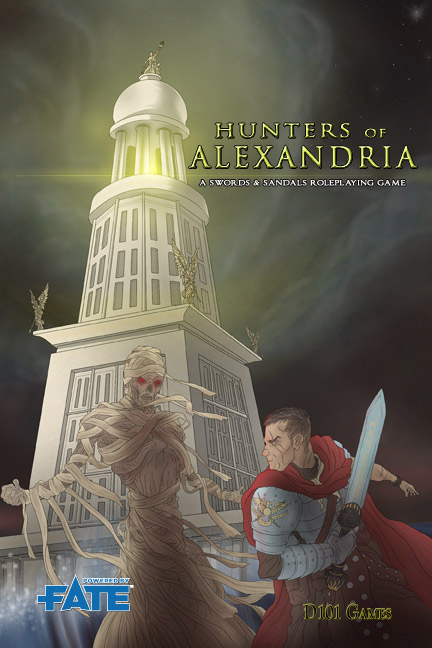
RPG Review - Hunters of Alexandria by Paul Mitchener


Hunters of Alexandria by Paul Mitchener, 2015, 111 pages.
A Swords and Sandals Roleplaying Game. D101 Games.


D101 Games: Hunters of Alexandria

This is a sweet little RPG by the incomparable incalculable Dr. Paul Mitchener with an added scenario by publisher Newt Newport.

The game is set in Roman Alexandria in the year 753 after the foundation of Rome. That's 1 AD to you and me...well, to me anyway; you might be more of a CE person. Anyway, the book is set in ancient Alexandria when it is a thriving city under Roman rule. The conceit is that all the players are part of an organization called The Venatores (or Hunters, if you're like me and have a North American education and didn't learn some cool words in Latin) and your job is to seek out and trouble-shoot supernatural threats to the city and empire.

And why not? Roman Alexandria is chock full of larvae lamiae, lares, and lycanthropes, not to mention more exotic things that have creeped in from nearby Aegyptus, like ghouls, sphinxes, and sha.

The book offers a capsule history of Alexandria, a gazetteer of places in the city, some sample characters, a who's who of the city, factions for the PCs to rub up against, some scenario outlines, a full adventure, and all the rules you need to play. Rules are a modified version of fate, but you don't need a copy of fate to play. The game is light enough that you can pick up and play with minimal preparation, and it can do this because you, yes you, can fill in all the blanks you need from your own imagination of what a Roman city is like. Setting the game in Roman Alexandria is actually a brilliant stoke, because it's just exotic enough to give a sense of wonder, and yet familiar enough to make playing there easy.

As good as it is, I do have a few small quibbles with the book. It really could use another pass through an editor or proofreader, though the errors are not significant enough to impede one's enjoyment. And the included scenario, although it does an excellent job of making use of the core text and bringing the setting alive, will need to be given some thought before running it to smooth out some structural inconsistencies – for example some scenes are connected by threads so silky I think the players will easily miss their connection, and the ending will need to be given some thought as none of the 4 possible resolutions presented actually deals with what I think the the most likely outcome. Lastly, there is some questionable advice in this scenario – it's a mystery and the text advises you not to give the players advice when they get stuck (even when the scenario writer doesn't provide enough clues). If you follow this, you may well end up in one of those embarrassing situations where the game grinds to a halt because nobody knows what to do next, and you'll be forced to write a Gumshoe system knock-off - and nobody wants that.

I'm happy to be able to recommend this game. It's short. It's sweet. It's fun. The hiccups in the scenario are easily overcome. And you all need more ancient history in your gaming life than you currently have – stop mumbling, you know it's true! Duo pollice!